What Does "Bleed France White" Mean? The Verdun Strategy Explained
France
"Bleed France white" was German General Erich von Falkenhayn's
strategy at the Battle of Verdun in 1916. Instead of trying to
capture the fortress town, Falkenhayn planned to inflict massive
casualties on the French army until their manpower and morale
were exhausted.
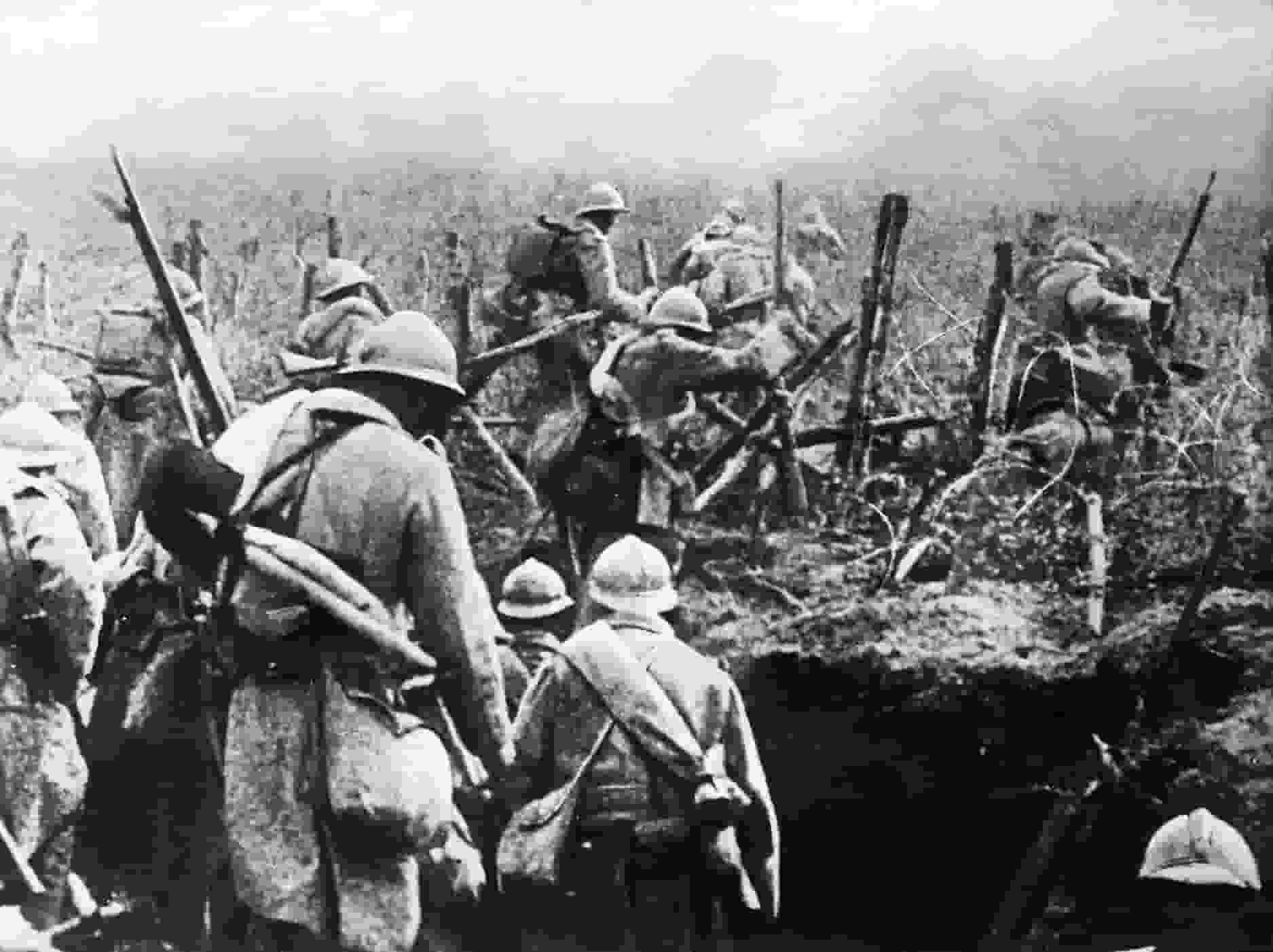
The Battle of Verdun (February 21 – December 18, 1916) was the
longest battle in modern history, lasting 300 days and resulting
in over 700,000 casualties between French and German forces.
What was Germany's strategy? General Erich von Falkenhayn aimed
to "bleed France white" by attacking the symbolic fortress town
of Verdun, forcing France to defend it at any cost through
attrition rather than seeking a decisive breakthrough. How did
France respond? Under commanders Philippe Pétain and later
Robert Nivelle, the French maintained supply lines via the
"Voie Sacrée" (Sacred Road) and
Outcome
French Victory
Commanders
Erich von FalkenhaynChief of the German General Staff (overall planner of the Verdun offensive) · German
Crown Prince WilhelmCommander, German 5th Army (operational commander at Verdun) · German
Konstantin Schmidt von Knobelsdorf5th Army Chief of Staff · German
Max von GallwitzGerman artillery commander later in the battle · German
Paul von HindenburgChief of the Great General Staff (from August 1916, oversaw later phase) · German
Erich LudendorffDeputy to Hindenburg (from August 1916) · German
Joseph JoffreFrench Commander‑in‑Chief (overall strategic direction) · French
Philippe PétainCommander, French Second Army (defensive command at Verdun, Feb–Apr 1916) · French
Robert NivelleCommander, French Second Army (later phase, from Apr 1916) · French
Charles ManginFrench corps/division commander, key attacker in later French offensives · French
Noël de CastelnauSenior French army group commander, involved in Verdun sector · French
Forces engaged
Frenchabout 1,140,000–1,500,000 soldiers
Germanabout 1,250,000 soldiers
Casualties
Frencharound 370,000–400,000
Germanaround 330,000–355,000
Region
North East France
Coordinates
49.208, 5.422
Chronicle
What happened
I
Chapter 1 of 5
Background
A Storm Over the Meuse
By the end of 1915, the Western Front had hardened into a scar across the face of Europe: a zig-zag of trenches, wire, and cratered earth stretching from the North Sea to the Swiss border. The great war of movement that had swept through Belgium and northern France in 1914 was long over; what remained was a grinding stalemate, measured in yards and paid for in blood.
For Germany, the problem was brutal in its simplicity: the war could not be won by waiting. The British Empire was growing stronger by the month, flooding the continent with men and materiel; Russia, for all its turmoil, still loomed in the east; and France, though battered, refused to break. The German Chief of the General Staff, Erich von Falkenhayn, had come to a cold conclusion: victory would not come from a grand breakthrough, but from exhaustion. If he could force France to bleed itself dry in a battle it could not abandon, Paris might eventually seek peace, and with France out, Britain would have no foothold left on the continent.
He needed a place where strategy and symbolism overlapped, a point so vital, so sacred, that the French would defend it at any cost. He found it in Verdun.
The Fortress That Would Not Fall
Verdun was no ordinary town. For centuries it had been a guardian of France's eastern frontier, a fortress-city perched on the Meuse River, ringed by a modern belt of nineteen forts and smaller strongpoints (Douaumont, Vaux, Souville, and more) built of reinforced concrete and steel, designed to withstand the heaviest artillery of the age. The outer ring of forts formed a 28-mile arc around the citadel, linked by underground galleries, telephone lines, and narrow-gauge railways.
But by 1916, Verdun's teeth had been pulled. After the easy fall of Belgian fortresses like Liège and Namur in 1914, French high command had concluded that modern super-heavy siege guns had rendered forts obsolete. Dozens of artillery batteries were stripped from the Verdun sector and sent to support offensives elsewhere; the great turreted guns were removed or left with minimal crews; ammunition stocks dwindled; and plans were even drawn to demolish some forts rather than let the Germans use them. By February 1916, Fort Douaumont, the largest and highest of the Verdun forts, was manned by a skeleton crew of fewer than seventy technicians, its drawbridge jammed, its machine-gun bunkers unmanned, and nearly five tons of explosives rigged inside for demolition.
Falkenhayn knew this. He also knew the French could not afford to lose Verdun, not militarily, and not in the eyes of their people. The city's capture would open the road toward Paris and shatter French morale; its defense would demand every available man and gun. On 21 February 1916, under the command of Crown Prince Wilhelm, the German Fifth Army unleashed Operation Gericht ("Judgement"), a storm of steel and fire meant to turn Verdun into a meat grinder from which France would never emerge.
The Germans surged forward, overran the outer forts, and drove deep into the ring around the city. Fort Douaumont fell within the first days, almost without a fight. But Verdun itself, the city on the Meuse, never gave up an inch. However far the German lines advanced, however close the enemy pressed, the city remained firmly in French hands until the very last day of the battle. What followed, then, was not the fall of a fortress but the longest battle of the First World War: ten months of hell that would consume nearly a million lives and leave the landscape so poisoned that, a century later, teams still clear tons of unexploded shells from the soil every year.
A Single Road, a Nation's Lifeline
There was one fragile thread keeping Verdun alive: a single departmental road running southwest from the city to Bar-le-Duc. Everything (men, food, water, ammunition, wounded) had to move along this ribbon of earth, under constant German artillery fire. Precisely because the Germans had encircled the city without ever taking it, this road became the sole lifeline through which France could keep feeding its will to resist. It would soon be known as the Voie Sacrée, the Sacred Way, and it would become the artery through which France poured its will to resist.
By the time the first German shells screamed overhead on the morning of 21 February, the stage was set: a stripped fortress, a national symbol, and a strategy built not on victory, but on attrition. What Falkenhayn intended as a calculated slaughter would become something else entirely: a battle that took on a life of its own, dragging both armies deeper into a nightmare neither could easily escape.
Wikipedia – Battle of Verdun
Imperial War Museum – “What Was The Battle Of Verdun?”
The History Press – Verdun timeline
History Hit – Why Was the Battle of Verdun so Significant?
Roads to the Great War – A Verdun Chronology
The Thunder Breaks: 21–25 February 1916
At 7:15 a.m. on 21 February 1916, the world around Verdun dissolved into noise. Along a front of roughly 8 miles east of the Meuse, 1,200 German guns — including super-heavy 420 mm “Big Bertha” mortars — opened fire in a bombardment so intense that the sound carried more than 90 miles. For nine hours, shells rained down on French trenches, wire, and forts in a rolling Trommelfeuer — “drumfire” — so dense that individual explosions merged into a single, earth-shaking roar.
The German plan was precise: pulverize the French front, then advance in small, disciplined waves, using flamethrowers and storm troops to clear strongpoints with minimal infantry losses. By late afternoon, German infantry moved forward behind a creeping barrage, expecting to find little more than shattered earth and dazed survivors.
They were wrong.
The First Line Cracks
The French forward positions were understrength and undergunned, but not empty. In the Bois des Caures, Lieutenant-Colonel Émile Driant — a famous writer-turned-officer — led two battalions of chasseurs à pied in a desperate holding action against overwhelming force. For two days they clung to the wood, repelling repeated assaults, until sheer weight of numbers and artillery fire finally broke them. Driant fell on 22 February, killed alongside most of his men; only a handful escaped.
With the Bois des Caures lost, the German advance accelerated. On 23 February, the villages of Brabant and Haumont were taken; on 24 February, the French second line of defense collapsed as Beaumont-en-Verdun and the Bois des Fosses were overrun. German troops pushed down the Ravin Hassoule, a gully that led directly toward Fort Douaumont — the keystone of Verdun’s eastern defenses.
The Fall of Douaumont
At 3:00 p.m. on 25 February, two battalions of the Brandenburg Infantry Regiment 24 advanced toward Douaumont village. In the confusion of battle, a small German party — no more than a hundred men — found itself cut off from its own artillery and took cover in a ravine leading to the fort. To their surprise, the massive concrete structure loomed almost silent above them, its machine-gun bunkers unmanned, its drawbridge stuck in the down position.
Slipping through an unguarded ditch bunker, the Germans entered the fort’s interior and found fewer than thirty French defenders — a maintenance crew led by a warrant officer — who offered little resistance before being taken prisoner. In less than an hour, the largest and most modern of Verdun’s forts had fallen to a handful of men, almost by accident.
The news electrified Germany. In Paris, it sent shockwaves through the high command. That same evening, General Philippe Pétain arrived to take command of the Verdun sector. His orders were simple and absolute: hold the east bank of the Meuse at all costs, and let no more forts be abandoned without a fight.
The Sacred Way Holds
Pétain reorganized the defense in depth, establishing mutually supporting strongpoints rather than packing every man into the front-line trenches. He took direct control of the artillery and, crucially, secured the Voie Sacrée. The road was restricted to military traffic only; a full division was assigned just to keep it repaired under fire; and a relentless stream of trucks — one every 14 seconds at the peak — fed Verdun with men and materiel.
By 6 March, more than 20 French divisions had been rotated through the Verdun sector, bringing the total strength to over 200,000 men. What Falkenhayn had hoped would be a quick, bleeding trap was becoming a prolonged, mutual slaughter.
The Battle Spreads: West Bank and the Fight for the Heights
Frustrated by the stiffening resistance on the east bank and the punishing fire from French artillery on the west, the Germans expanded the offensive. On 6 March, they attacked across the Meuse to seize the high ground of Le Mort-Homme and Hill 304 — ridges that gave the French perfect observation and artillery positions over the German rear.
The fighting on the west bank was as brutal as anything on the east. The Germans captured the Bois des Corbeaux and parts of Mort-Homme, but French counterattacks repeatedly threw them back. By late March, the Germans held parts of Côte 265 and Malancourt, but Mort-Homme and Hill 304 remained contested hellscapes, their summits shaved down by millions of shells.
The Push Toward Souville
Through April and May, the battle became a series of grinding assaults and counterassaults, with villages and forts changing hands multiple times. On 8 May, a catastrophic explosion inside Fort Douaumont — likely caused by an unattended cooking fire igniting stored shells — killed 679 German soldiers and temporarily disrupted the German hold on the fort.
In early June, the Germans finally captured Fort Vaux after a five-day siege, its French garrison surrendering only when their water ran out. Emboldened, Crown Prince Wilhelm launched the largest offensive of the battle on 23 June, aiming for the last ridge before Verdun itself — the Souville heights. German troops reached the outskirts of Fleury-devant-Douaumont and, in some accounts, came within sight of Verdun’s rooftops. But they could go no further. French artillery, now equal or superior in many sectors, tore gaps in the advancing lines, and counterattacks drove the Germans back from the edge of the Souville ridge.
By mid-July, the German offensive had reached its high-water mark — and stalled.
Wikipedia – Battle of Verdun
Imperial War Museum – “What Was The Battle Of Verdun?”
The History Press – Verdun timeline
History Hit – Why Was the Battle of Verdun so Significant?
Roads to the Great War – A Verdun Chronology
“They Shall Not Pass”
By late June 1916, the German command faced a stark choice: push harder toward Verdun, or accept that the original plan had failed. Falkenhayn had envisioned a battle of attrition fought primarily by artillery, with German infantry holding secure defensive lines while the French bled themselves in counterattacks. Instead, German infantry had been thrown into repeated frontal assaults, suffering losses nearly as heavy as the French.
On 23 June, General Robert Nivelle — who had replaced Pétain as commander of the Second Army in April — issued an order of the day that would become legend: “Ils ne passeront pas.” — “They shall not pass.” It was more than a slogan; it was a reflection of a new reality. The French had learned to fight this battle on their own terms: rotating fresh divisions through the front, massing artillery for precise counter-barrages, and using the Voie Sacrée to sustain a defense that simply would not break.
The Somme Changes Everything
On 1 July 1916, the British and French launched their massive offensive on the Somme, 150 miles to the north. The timing was no coincidence; the pressure at Verdun had become unbearable, and the Allies needed to force Germany to divert men and guns away from the Meuse.
The effect was immediate. German divisions and heavy artillery were pulled from Verdun to plug gaps on the Somme front. What had been Germany’s main effort in 1916 was now a secondary theater, yet the fighting continued with undiminished ferocity. On 11–12 July, the Germans made their final major attempt to break through to Verdun, assaulting Fort Souville and the village of Fleury. They failed. From that point on, the initiative slowly but inexorably shifted to the French.
The French Counteroffensives: October–December
Through the late summer and early autumn, Verdun settled into a grim stalemate — a mosaic of shattered woods, obliterated villages, and shell-cratered slopes where small patrols fought over yards of ground. Then, in October, the French struck back.
After a meticulous artillery preparation beginning on 19 October, French infantry attacked on 24 October with six divisions. In a single day they advanced more than 3 kilometers, recapturing Fort Douaumont, which the Germans had largely abandoned under the weight of French fire. On 2 November, Fort Vaux was retaken as well, its German garrison having evacuated under relentless bombardment.
A final French offensive on 15 December pushed the Germans back another 2 miles, almost to their starting positions of 21 February. By the time major operations halted on 18 December, the French had regained nearly all the ground lost in the opening phase of the battle. Verdun had not fallen.
Wikipedia – Battle of Verdun
Imperial War Museum – “What Was The Battle Of Verdun?”
The History Press – Verdun timeline
History Hit – Why Was the Battle of Verdun so Significant?
Roads to the Great War – A Verdun Chronology
The Price of Ten Months
When the guns finally fell silent around Verdun in mid-December 1916, the landscape was unrecognizable. Nine villages — Fleury, Douaumont, Vaux, Beaumont, Haumont, Ornes, Cumières, Bezonvaux, and Louvemont — had been completely destroyed and never rebuilt; they were later declared to have “died for France.” The Douaumont Ossuary, built after the war, now holds the remains of more than 130,000 unidentified soldiers, with over 16,000 marked graves stretching out before it — a single field of stone crosses that speaks louder than any statistic.
The human cost was staggering. Modern estimates place French casualties at roughly 377,000 (including around 160,000 killed or missing) and German casualties at about 337,000 (with 143,000 killed or missing) — a combined total of more than 700,000 men in ten months. Some older sources push the combined figure closer to one million when wounded, missing, and later deaths are included. On average, Verdun consumed more than 70,000 casualties per month — a rate that staggered even a generation already numb to slaughter.
A Strategic Failure, a Symbolic Victory
In strict strategic terms, Falkenhayn’s plan had failed. He had hoped to bleed France dry and force a separate peace; instead, the French army held, and the German army bled almost as badly. The heavy losses at Verdun, combined with even greater casualties on the Somme, triggered a manpower crisis in Germany that would only worsen as the war dragged on.
Falkenhayn himself paid the price. On 29 August 1916, he was dismissed as Chief of the General Staff and replaced by the duo of Paul von Hindenburg and Erich Ludendorff, who immediately ordered an end to major offensive operations at Verdun.
For France, Verdun became something more than a battlefield — it became a symbol. The image of ordinary soldiers holding the line against overwhelming odds, supplied by that single, shelled road, fed into a national myth of endurance and sacrifice. Pétain, the “Lion of Verdun,” rode that reputation to the pinnacle of French military leadership — and later, infamously, to the head of the collaborationist Vichy regime in the Second World War. Nivelle, whose counteroffensives had helped turn the tide, would be promoted to command the entire French army — only to see his reputation shattered by the disastrous spring offensive of 1917 and the mutinies that followed.
A Landscape Still at War
Verdun did not end with the armistice. Even today, more than a century later, the forest around the battlefield remains dangerously littered with unexploded ordnance — an estimated 10 million shells, many filled with arsenic and other poisons, still buried in the soil. Specialized “bomb-clearing” teams recover roughly 40 tons of munitions from the Verdun zone every year; at current rates, they will be doing so for centuries. Parts of the Zone Rouge — the “Red Zone” — are still closed to development, a permanent scar on the map where the war never truly ended.
Wikipedia – Battle of Verdun
Imperial War Museum – “What Was The Battle Of Verdun?”
The History Press – Verdun timeline
History Hit – Why Was the Battle of Verdun so Significant?
Roads to the Great War – A Verdun Chronology
1. Black pigeons
French handlers sometimes dyed or painted carrier pigeons black so they would be less visible against the black and smokey sky and mistaken for other birds by German shooters.
2. Verdun is still taking victims
Of the roughly 53 million shells fired during Verdun, about one in four failed to explode on impact, leaving the landscape littered with live munitions. More than a century later, the ground around Verdun still hides deadly explosives, and a number of people have been killed or seriously injured when disturbed shells suddenly detonated.
3. Almost the entire French Army passed through Verdun
Thanks to the constant rotation of units along the Voie Sacrée, Verdun was fought by most of the French Army, not just a few divisions. Between February and December 1916, roughly 70–75% of all French divisions served in the Verdun sector at least once, meaning about three out of every four French soldiers in 1916 spent time on this battlefield.
4. honoring the enemy
Enemy pilots dropped wreaths over crashed airmen at Verdun
This unusual tradition began with a German pilot after French ace Adolphe Pégoud was killed in August 1915. Days later, his opponent flew over the crash site and dropped a wreath with a ribbon reading: “From his opponent to flyer Pégoud, fallen in battle for his country.” Over the Verdun battlefield, where aircraft played a crucial role, this gesture of respect—dropping wreaths for enemy airmen—became a small but striking tradition amid the slaughter.
Sky HISTORY – 9 little-known facts about the Battle of Verdun
GEO – Dix choses que vous ne saviez pas sur la bataille de Verdun
The Ground
Where it was fought
Test yourself
Quiz
Question 1
What was the German codename for the opening offensive at Verdun?
Question 2
Fort Douaumont was heavily manned and fully armed when the battle began.
Question 3
Who commanded the German Fifth Army during the offensive?
Question 4
What was the single supply road to Verdun called?
Question 5
What Allied offensive, launched 1 July 1916, diverted German troops away from Verdun?
Question 6
By December 1916, the German army had gained more ground than it held in February.
Explore more
You Might Also Like
Ranked by country match, then era, then how close the battles were in time.