Why Was the Battle of Salamis Important? The 480 BC Greek Victory Explained
Greece
The Battle of Salamis was important because it was the decisive naval victory that halted the Persian invasion of Greece in 480 BC, preventing Persian domination of the Mediterranean and allowing Greek civilization—and Western culture—to flourish.
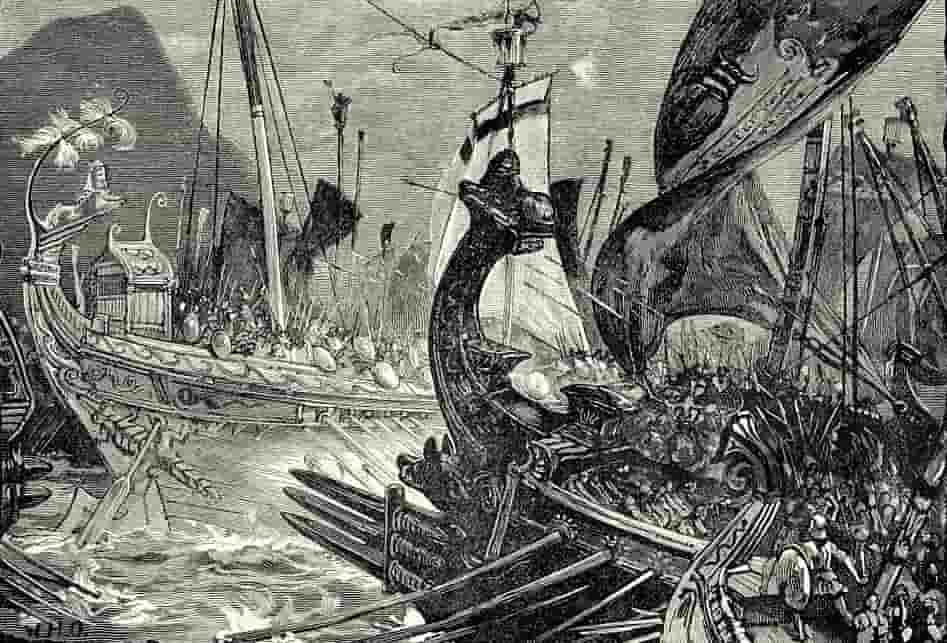
The Battle of Salamis (September 480 BC) was a naval engagement between an alliance of Greek city-states and the Achaemenid Persian Empire under King Xerxes I. What were the forces involved? The Greek fleet consisted of about 370 ships under Athenian leader Themistocles and Spartan commander Eurybiades, facing a Persian fleet of about 700 ships commanded by Xerxes I, with admirals including Ariabignes and Queen Artemisia I of Caria. What was the Greek strategy? Themistocles lured the much larger Persian fleet into the narrow straits between Salamis Island and the Athenian port of Piraeus, where Persian numerical superiority became a disadvantage and Greek triremes could exploit their superior maneuverability and seamanship. How did Xerxes respond? The Persian king watched from the shore as his fleet was drawn into the confined waters, where they became disorganized and vulnerable to coordinated Greek attacks. What was the outcome? The Greeks sank over 200 Persian vessels while losing only around 40 of their own, forcing Xerxes to retreat to Asia and abandon his invasion plans, marking a turning point in the Greco-Persian Wars that preserved Greek independence and enabled the rise of Athens as a naval power.
Outcome
Greek victory
Commanders
ThemistoclesAthenian leader and principal naval strategist · Greek
EurybiadesSpartan commander officially in charge of the allied Greek fleet · Greek
Xerxes IAchaemenid Great King and overall commander · Persian
AriabignesPersian admiral commanding part of the fleet · Persian
Artemisia I of CariaAllied queen and squadron commander in the Persian fleet · Persian
Forces engaged
Greekabout 370 ships
Persianabout 700 ships
Casualties
Greekaround 40 ships lost
Persianover 200 ships lost
Region
Attica
Coordinates
37.951, 23.567
Chronicle
What happened
I
Chapter 1 of 5
Background
A Fleet That Could Sink a Kingdom
After the blood and dust of Thermopylae, the Persian army marched south and burned Athens. The Acropolis went up in flames, temples and houses alike. To the Greeks watching from the island of Salamis and the nearby shores, it must have felt like the end of their world. But the real decision about the fate of Greece would not be made on land—it would be decided at sea. The Persian Empire, stretching from the Indus to the Aegean, had a navy built to dominate open water. The Greek allies, led by Athens, had a smaller fleet of triremes—fast, narrow, and built for ramming. What happened next turned geography, timing, and a single man’s gamble into a weapon that broke an empire’s advantage at sea.
Athens, the City of Ships
Athens had bet everything on its fleet. In the years before the Persian invasion, the statesman Themistocles had pushed the city to invest heavily in triremes, convinced that the coming war would be decided as much by oars and rams as by spears and shields. When Xerxes came, that investment was the only thing that allowed Athens to survive. The population was evacuated to Salamis, Aegina, and other refuges, while the fleet gathered in the straits between the island of Salamis and the Attic coast. The Persian army stood on the mainland; the Persian navy crowded the waters nearby, hungry for a decisive blow. The stage was set: two fleets, one narrow stretch of sea, and the future of Greece hanging in the balance.
Xerxes’ Problem at Sea
For Xerxes, Salamis was not just about pride. His army was advancing toward the Isthmus of Corinth, but it needed supplies shipped in by sea. As long as the Greek fleet lurked around Salamis, the Persians could not freely use the waters off Athens and Phaleron. In strategic terms, the Greeks were a thorn in the side of the entire invasion. The Persian high command knew they had to force a battle and crush the Greek navy—or risk losing control of their own logistics. Both sides wanted a fight; the question was where and on whose terms.
Britannica – Battle of Salamis
Wikipedia – Battle of Salamis
Livius.org – Salamis (480 BCE)
The Trap in the Straits
The Greek fleet, perhaps around 370 triremes against a Persian force that ancient sources put much higher (modern estimates vary but agree the Persians were more numerous), faced a brutal choice: fight in open water and risk being outflanked, or lure the enemy into the narrow straits between Salamis and the mainland, where their numbers would become a liability. Themistocles chose the second option and then added a layer of deception. According to Herodotus, he sent a secret message to Xerxes claiming the Greeks were preparing to flee, urging the Persians to attack immediately or lose their chance. The King of Kings took the bait.
Dawn in the Strait
In the pre‑dawn darkness, the Persian fleet began to move into the strait. The plan, from the Persian point of view, was logical: enter the channel, block the exits, and crush the Greek ships against the shore. But as the light grew, what they found was not a panicked retreat but a well‑formed line of Greek triremes, crews ready, rams lowered. The waters were too confined for the Persian armada to maneuver freely. Ships jostled, turned late, and began to tangle with one another. In open sea, their numbers would have overwhelmed the Greeks; in the strait, they became a knot of colliding hulls.
Ram, Sink, Repeat
Greek triremes were built for one brutal purpose: to smash into enemy ships with their bronze‑sheathed rams, punch holes below the waterline, and leave them sinking or dead in the water. In the chaos of the strait, the Greeks used this advantage mercilessly. They rammed, backed off, and rammed again, targeting disordered Persian vessels. Some Persian ships were sunk outright; others were disabled and then boarded by Greek marines. Ancient accounts speak of hundreds of Persian ships lost, while Greek casualties were far lighter. Xerxes, watching from a vantage point on the shore, saw his massive fleet—not a toy fleet, but the navy of the greatest empire on earth—broken apart in a narrow channel he had thought would guarantee victory.
Britannica – Battle of Salamis
Wikipedia – Battle of Salamis
Livius.org – Salamis (480 BCE)
Themistocles’ Gamble
The entire battle hinged on a single strategic choice: forcing the Persians to fight where their numbers hurt them. Themistocles understood that the Greeks could not win a clean, open‑water brawl against a larger, multi‑ethnic fleet. He turned the strait itself into a weapon. By choosing Salamis as the battleground and then using deception to draw the Persian fleet in at dawn, he ensured that the first clash would happen under conditions that favored Greek ships and crews. It was a gamble—if the Persians had refused the bait or attacked from another angle, the story might have ended very differently.
The Persian Miscalculation
Xerxes and his commanders expected a straightforward victory. They believed that sheer numbers and the prestige of the imperial navy would crush the Greek resistance once and for all. But they underestimated two things: the discipline of the Greek fleet, especially the Athenian triremes, and the impact of the confined space. In the strait, Persian ships could not deploy in their preferred formations, and their attempts to outflank the Greeks only created more confusion. The result was a force that, in theory, should have overwhelmed the enemy but in practice could barely keep its own lines intact.
The Moment the Tide Turned
Once the first Persian ships were sunk or disabled, the battle’s momentum shifted. Disordered vessels blocked the path of those behind them; some tried to turn and flee, only to collide with their own side. The Greeks, by contrast, fought in a more coherent line, exploiting gaps and concentrating force where the Persian formation was weakest. By the end of the day, the Persian fleet was scattered, its command structure shaken, and its ability to support the land army severely damaged. Salamis did not end the war on the spot, but it broke the Persian aura of invincibility at sea and gave the Greeks the breathing room they needed to prepare for the final showdown on land.
Britannica – Battle of Salamis
Wikipedia – Battle of Salamis
Livius.org – Salamis (480 BCE)
A Victory That Changed the War
The immediate result of Salamis was clear: the Persian navy had suffered a heavy defeat, losing a large portion of its ships and its grip on the local waters. Xerxes, facing supply problems and growing unrest in parts of his empire, withdrew with much of his army back to Asia, leaving a strong force under Mardonius to continue the campaign in Greece. The psychological impact was enormous. Greek cities that had been wavering now saw that the Persians could be beaten, not just delayed. The victory also secured the sea lanes long enough for the Greek coalition to regroup and plan their next move.
From Salamis to Plataea
The true strategic payoff of Salamis came the following year. In 479 BCE, a pan‑Greek army led by the Spartan regent Pausanias met Mardonius at Plataea. Because the Persian navy was no longer able to dominate the seas and support the land force as it had before, the Greeks could concentrate their strength on land. The result was a decisive victory at Plataea that effectively ended the Persian invasion of mainland Greece. At roughly the same time, a Greek fleet attacked the remaining Persian ships at Mycale, crushing what was left of their naval presence in the region. Salamis had not finished the war, but it had made victory possible.
Memory of the Straits
For later generations, Salamis became a symbol of clever strategy overcoming brute force. The narrow waters that had once seemed a trap for the Greeks were remembered as the place where an empire’s advantage vanished. Monuments and inscriptions celebrated the victory, and historians—from Herodotus onward—returned again and again to the image of Xerxes watching helplessly as his great fleet tangled and sank in the strait. In the long arc of history, Salamis is often described as one of the battles that shaped the future of the Mediterranean world, and by extension, of Europe itself.
Britannica – Battle of Salamis
Wikipedia – Battle of Salamis
Livius.org – Salamis (480 BCE)
1. The Queen Who Sank Her Own Allies to Survive
At the Battle of Salamis (480 BCE), the only woman Herodotus explicitly praises for battlefield courage was Artemisia, queen of Halicarnassus. When an Athenian trireme chased her through the crowded strait, she found her escape blocked by friendly ships. In a desperate move, she deliberately rammed and sank an allied vessel—commanded by the Calyndian king Damasithymos—creating space to slip away. The Athenian captain, seeing her destroy what looked like a “friendly” ship, assumed she was on their side and broke off the pursuit. Xerxes, watching from the shore, reportedly believed she had just sunk an enemy ship and declared, “My men have become women, and my women men.”
2. The “Retreating” Squadron That Never Really Fled
Before the main clash at Salamis, the Greek coalition was close to falling apart. Themistocles solved this with a double bluff: he sent a secret message to Xerxes claiming the Greeks were about to flee, and at the same time ordered the Corinthian contingent to sail north with their sails raised, as if they were running away. In reality, this “retreating” group was guarding the western exit of the strait and preventing an Egyptian detachment from hitting the Greek rear. The fake retreat helped convince the Persians that a quick strike would catch the Greeks disorganized, drawing them into the trap.
3. The Battle That Turned Persian Ships into a Lifeline
After Salamis, the Persian navy was so badly damaged that it could no longer guarantee safe passage for Xerxes’ massive army. When the king decided to withdraw to Asia, he found that the pontoon bridges across the Hellespont had been wrecked by storms. With his fleet crippled and the sea lanes insecure, he had to rely on the remaining ships to ferry his troops across in stages, under constant threat of Greek attack. The man who had started the campaign by bridging the sea with ships ended up depending on those same ships as a lifeline to escape.
Wikipedia – Artemisia I of Caria / Damasithymus
Wikipedia – Battle of Salamis / Xerxes I
Herodotus, Histories (Book 8)
The Ground
Where it was fought
Test yourself
Quiz
Question 1
Why did the Greeks choose the straits of Salamis as their main battleground?
Question 2
After Salamis, Xerxes immediately withdrew all Persian forces from Greece and ended the war.
Question 3
The victory at Salamis directly prevented the Persian navy from supporting future major offensives in Greece.
Question 4
Which later land battle, fought in 479 BCE, is often seen as the final blow to the Persian invasion after Salamis?
Question 5
Which Greek city‑state’s squadron was sent on a “fake retreat” to mislead the Persians?
Explore more
You Might Also Like
Ranked by country match, then era, then how close the battles were in time.